A founder who wants key people to think like owners faces a fork: actual shares, or their economics without the shares. Phantom stock, stock appreciation rights (SARs), and an employee stock ownership plan (ESOP) are the three serious answers, and they are not three flavours of the same thing. One is a cash promise indexed to the share price, one a right to the appreciation only, one a qualified retirement plan that owns real stock. The tax clock, the accounting, and the valuation burden differ for each — and choosing on vibes alone is how a $15,000 retention bonus becomes a $3,000 penalty plus interest.
Three instruments, three promises
Phantom stock is a bookkeeping entry, not stock. The company credits an employee with phantom units, each tracking one real share's value. Nothing is issued, the cap table does not change, and no shareholder rights attach. At a vesting date or a liquidity event, the company pays cash equal to the unit value — or the appreciation, per the plan. The employee owns nothing — only a contractual promise to be paid later, which is exactly why § 409A governs it.
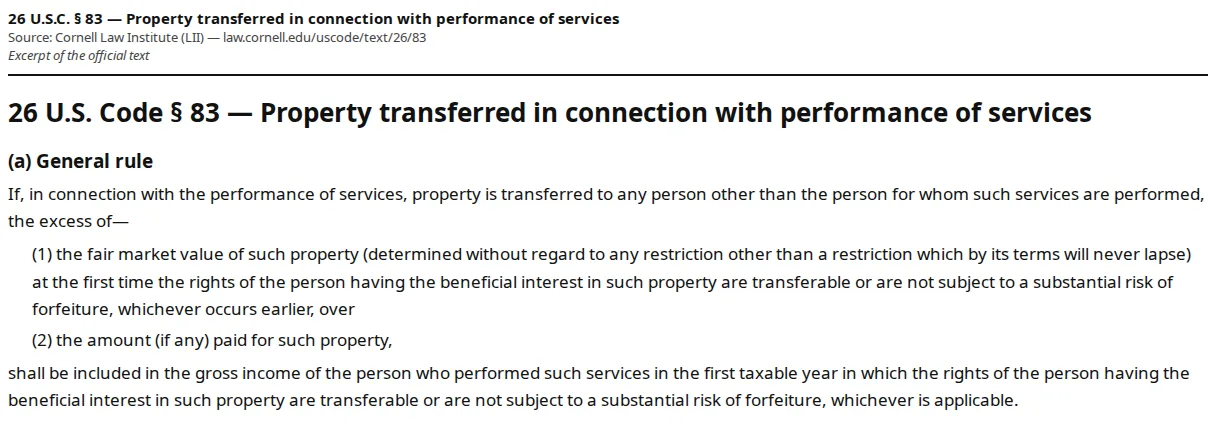
A stock appreciation right is the right to receive the increase in a share's value over a set base price, measured between grant and exercise. A SAR granted at a $10 base price and exercised at $25 pays $15 per unit, in cash or in shares — and the settlement form changes everything: cash-settled SARs are § 409A deferred compensation and ASC 718 liability awards; stock-settled SARs are equity awards taxed under § 83 at exercise.
An ESOP is different in kind: a qualified defined contribution plan — a stock bonus plan under § 401(a) — that invests primarily in qualifying employer securities, as the IRS puts it, citing § 4975(e)(8). The plan trust owns real shares. Employees hold accounts inside the trust, not shares directly, and the company deducts contributions used to buy stock. The IRS and the Department of Labor share jurisdiction — the first sign of its compliance load.
| Attribute | Phantom stock | Cash-settled SARs | ESOP |
|---|---|---|---|
| What the employee holds | Cash promise indexed to share value | Right to appreciation over base price | Account in a trust owning real shares |
| Shares issued | None | None (cash) or shares (stock-settled) | Yes — the trust buys and holds them |
| Employee tax event | Ordinary income at payment | Ordinary income at exercise/settlement | Tax-deferred until distribution; § 402 |
| Governing statute | IRC § 409A (deferred compensation) | IRC § 409A (cash) / § 83 (stock) | IRC § 401(a), § 4975(e)(8), § 409(p) |
| Accounting | ASC 718 liability, remeasured each period | ASC 718 liability (cash) / equity (stock) | Contribution expense at fair value |
| Valuation | § 409A valuation | § 409A valuation | Annual independent appraisal |
| Voting / ownership | None | None (cash) | Indirect, through the trust |
| Authority | 26 U.S.C. § 409A | 26 U.S.C. §§ 83, 409A; ASC 718 | IRS ESOP guidance; 26 U.S.C. § 401(a) |
The tax clock: § 83, § 409A, and § 402
The first question for any equity-like award is when the employee is taxed, and the answer turns on whether property changed hands. Under 26 U.S.C. § 83(a), property transferred for services is taxed at fair market value minus the amount paid, when the rights first become transferable or no longer subject to a substantial risk of forfeiture. Phantom stock transfers no property, so § 83 never starts: the employee is taxed when the cash arrives, as ordinary income, and the employer deducts the same amount that year under § 83(h).
SARs split on settlement. A stock-settled SAR is an option-like right: § 83(e)(3) excludes an option without a readily ascertainable fair market value, so taxation waits until exercise, when the shares are taxed at their value minus any amount paid. A cash-settled SAR never delivers property, so it is deferred compensation under § 409A, taxed as ordinary income at settlement. The plan document's settlement clause decides which clock applies; leave it ambiguous and you have written a tax surprise, not a plan.
Section 409A is what makes phantom stock and cash SARs dangerous to draft casually. A nonqualified deferred compensation plan may distribute only at six events — separation from service, disability, death, a specified time or fixed schedule, a change in control, or an unforeseeable emergency — and a specified employee of a public company must wait six months after separation. Elections to defer must be made by the close of the preceding taxable year, or within 30 days of first eligibility. Fail any of it and § 409A(a)(1) prices the failure: all deferred compensation becomes includible in gross income, plus interest at the underpayment rate plus one percentage point, plus an additional tax of 20% of the amount included.
An ESOP runs on the qualified-plan clock instead. Contributions are deductible when made, the trust's growth is tax-deferred, and the employee is taxed only on distribution under § 402. A lump-sum distribution of employer securities can use the net unrealized appreciation (NUA) rule of § 402(e)(4): the appreciation is excluded from income at distribution and taxed as capital gain when the shares are later sold — a genuine advantage no phantom plan can offer, and the reason two agencies enforce the ESOP's qualification requirements instead of one.
The payout math, worked
Take a VP with 1,000 phantom units at a $10 § 409A value, vesting over four years, payable at the earlier of a liquidity event or year five. At payout the value is $25 per share.
The $15,000 is ordinary income to the VP in the year of payment, subject to withholding and FICA, and a $15,000 deduction to the company the same year. If the plan pays the full unit value rather than the appreciation only, the payout is $25,000 — units times value, taxed as wages. A cash-settled SAR pays exactly the same $15,000: the difference is the shape of the promise, not the size of the cheque.
Now the failure case. If that phantom plan violates § 409A — say it lets the VP accelerate payment on demand, which § 409A(a)(3) forbids — the $15,000 is includible immediately, plus a 20% additional tax of $3,000, plus interest at the underpayment rate plus one percentage point from the year the amount was first deferred. A $15,000 retention tool becomes an $18,000-plus tax bill before interest, and the employer's FICA and deduction timing are thrown off. That is why § 409A plans are drafted by counsel and reviewed annually, not copied from a template. Run the comparison on your own numbers with our ROI calculator before choosing: the ESOP's deferral is worth real money, but only if the company can fund the repurchase obligation when people leave.
The accounting: ASC 718 makes cash expensive on paper
Under FASB ASC 718, the accounting follows the settlement form. Equity-classified awards — stock-settled SARs, restricted stock, options — are measured once at grant-date fair value and expensed over the vesting period. Cash-settled awards — phantom stock and cash SARs — are liabilities, remeasured at fair value at every reporting date until settlement, with every change flowing through compensation expense. A rising share price raises the liability and the expense every quarter; a falling price reverses it. F.W. Cook's ASC 718 analysis states the rule plainly: liability awards are remeasured at fair value at the end of each reporting period until exercise or settlement.
On the worked example, the 1,000-unit phantom liability grows from nothing at the $10 grant value to $15,000 at $25, recognised as expense as vesting progresses. An ESOP avoids this entirely: the company's expense is the contribution, measured at the fair value of the shares purchased, with no quarterly remeasurement of employee accounts. The trade is that the ESOP's expense is real cash out the door every year, while the phantom plan's expense is a liability that only becomes cash at payout.
Valuation: two different appraisals
Phantom stock and SARs live on the § 409A valuation — the same independent appraisal that prices stock options. It must be refreshed at least annually and after any material event, and the grant-date value sets the base price for SARs and the starting value for phantom units. A stale 409A valuation is not a paperwork problem: if the IRS revalues the grant, the SAR's base price was wrong, the deferral was mis-measured, and § 409A exposure follows. An ESOP's valuation is heavier: for securities that are not readily tradeable, the plan must value them annually through an independent appraiser under § 401(a)(28)(C), and IRS guidance ties "readily tradeable" to Notice 2011-19. The appraisal sets the price at which the trust buys shares and departing participants are cashed out, and it prices the repurchase obligation — the duty to buy back distributed shares — the ESOP's largest long-term cash commitment. The annual appraisal, trustee, administrator, and Department of Labor reporting cost a small company real money every year before a single share is bought — the price of the ESOP's tax advantages.
Exit, forfeiture, and the S-corp trap
Phantom stock and SARs are usually forfeited on departure before vesting; the plan document decides what happens after vesting: payment at separation, payment on the original schedule, or forfeiture of unexercised SARs after a post-termination exercise window. Because § 409A permits distribution at separation, most plans pay out then — but a specified employee of a public company must wait six months, and the plan must say so. The forfeiture rule is a design choice, not a legal default: write it before the first grant, not at the first resignation.
An ESOP's exit mechanics are statutory. A qualified participant — age 55 with ten years of participation under § 401(a)(28)(B) — may diversify up to 25% of the account, 50% in the final diversification year. On distribution, the participant has a put option under § 409(h): the company must buy back distributed shares at fair market value if there is no public market. The S-corporation ESOP carries the sharpest trap here: § 409(p) prohibits a nonallocation year, and the IRS states plainly that an ESOP-owned S corporation cannot deduct retirement plan contributions for ESOP participants. An S-corp founder who adopts an ESOP without § 409(p) testing is building a disqualification event, not a succession plan. For the deferred-compensation rules underneath the phantom and SAR designs, see our § 409A playbook — and for the entity question that precedes all of it, our Delaware C-Corp vs LLC comparison sets out which structure can hold the instrument you want.
The implementation sequence
- Choose the instrument by settlement form: cash-settled means § 409A and liability accounting; stock-settled means § 83 and equity accounting; an ESOP means a qualified plan, a trustee, and annual appraisals.
- Get a current § 409A valuation (or an ESOP appraisal) before the first grant, and calendar the annual refresh.
- Have counsel draft the plan: six permitted distribution events, no acceleration, election timing, and the six-month specified-employee delay for public companies.
- Get board approval and issue grant letters stating vesting, forfeiture, the distribution event, and the settlement form.
- Test § 409(p) before any S-corporation adopts an ESOP, and confirm deduction limits with a CPA.
- Tell payroll the tax year of payment in advance: phantom and SAR payouts are wages, subject to withholding and FICA in the year they are paid.
Founder & CEO Insight — Enow A. Jovial
- [x] Decide the settlement form first: cash-settled means § 409A and liability accounting; stock-settled means § 83 and equity accounting. Write it in the plan, not in a side letter.
- [x] Get a current § 409A valuation before the first grant, and refresh it annually and after any material event.
- [x] Model the ESOP repurchase obligation over ten years before adopting the plan.
- [x] Write the forfeiture and post-termination rules into the grant letter: what vests, what is forfeited, and when payment lands.
- [x] Tell payroll the tax year of payment in advance: phantom and SAR payouts are wages, subject to withholding and FICA in the year they are paid.