For a 10-person team that bills by the hour, Clockify Standard costs $658.80 a year on annual billing. Toggl Starter and Harvest Teams each cost $1,080. But the cheapest tier is not the cheapest outcome. Toggl's timer is the fastest to adopt, Harvest's invoicing is the most complete, and Clockify's free plan is the only one that fits a real five-person team without paying. The right choice turns on one question: how much of your week currently goes unbilled?
Founder & CEO Insight — Enow A. Jovial
The prices, side by side
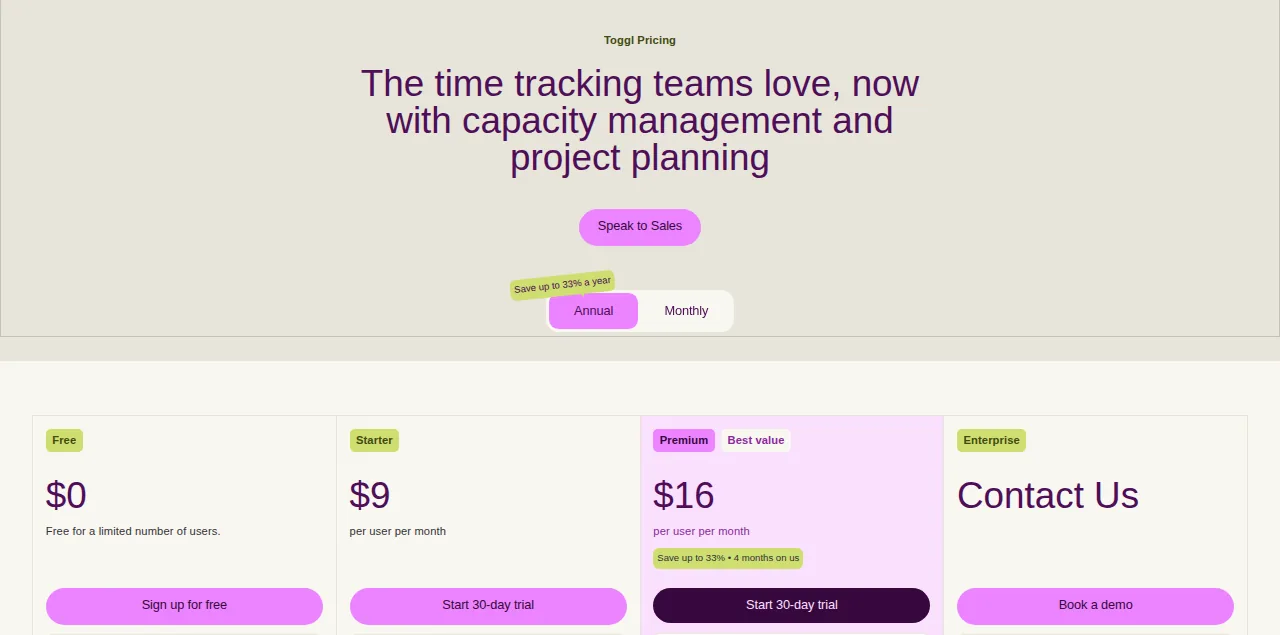
All three vendors price per user, per month, in US dollars, with annual billing discounted — the table is taken from each vendor's pricing page on 8 November 2026.
| Plan | Toggl Track | Harvest | Clockify | Authority |
|---|---|---|---|---|
| Free | $0, limited users | $0, 1 seat, 2 projects | $0, up to 5 users | Vendor, 8 Nov 2026 |
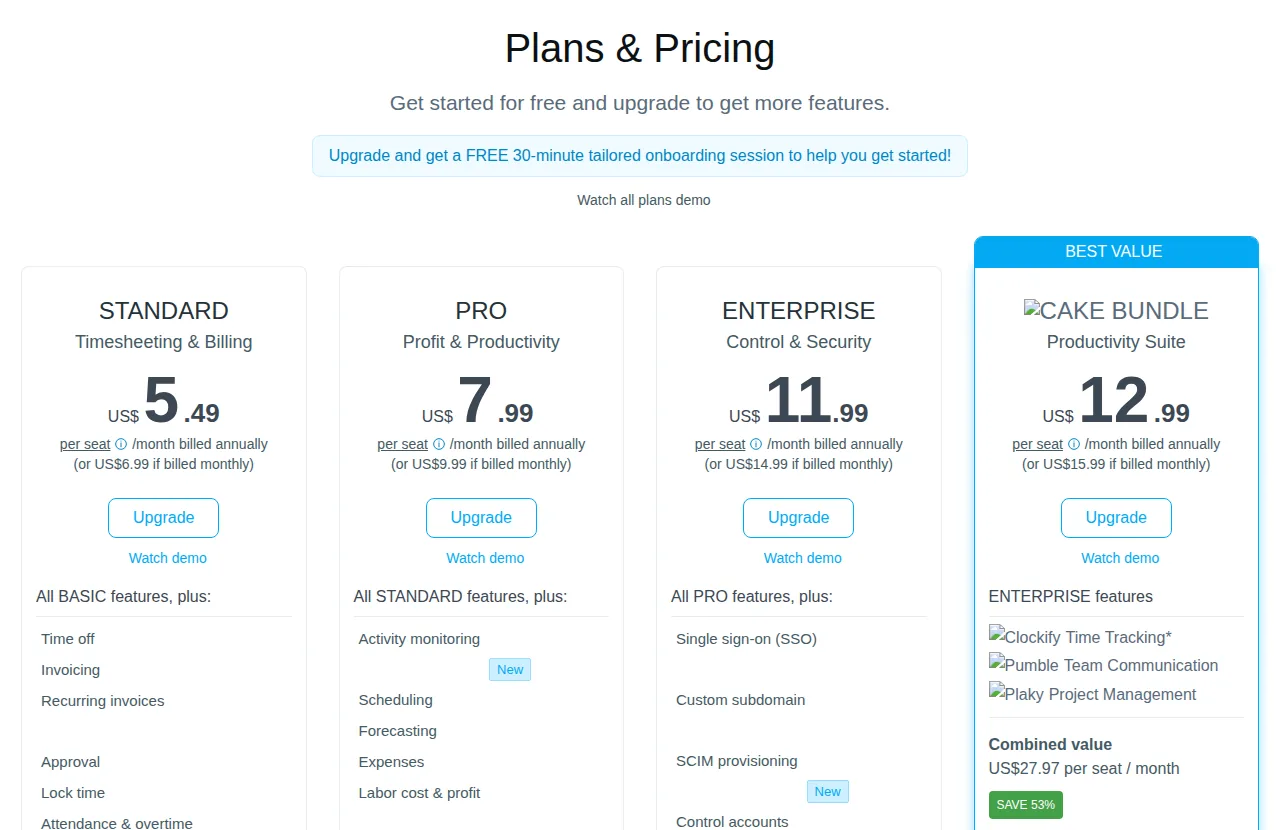
| Entry paid | Starter $9 / $12 monthly | Teams $9 / $11 monthly | BASIC $3.99 / $4.99 monthly | Vendor, 8 Nov 2026 |
| Mid paid | Premium $16 / $24 monthly | Enterprise $14 / $17.50 monthly | STANDARD $5.49 / $6.99 monthly | Vendor, 8 Nov 2026 |
| Upper paid | Enterprise, custom | Enterprise Plus, custom | PRO $7.99 / $9.99 monthly | Vendor, 8 Nov 2026 |
| Top paid | — | — | ENTERPRISE $11.99 / $14.99 monthly | Vendor, 8 Nov 2026 |
Toggl and Harvest charge the same $9 at the entry paid tier, so the choice between them is workflow, not price. Clockify undercuts both by roughly 40% at the comparable tier, because STANDARD at $5.49 adds invoicing and task rates. Toggl Enterprise and Harvest Enterprise Plus are custom-priced; Clockify ENTERPRISE is a published $11.99.
Toggl Premium at $16 against $24 is a genuine 33% cut, matching its page. Clockify's tiers sit at about 20% off monthly. Harvest's FAQ claims 20%, but $9 against $11 works out to about 18%.
What each tier actually gates
Toggl Track gates billable rates at Starter. On the free plan you can track time but cannot attach a rate to it. The free plan is described only as "a limited number of users" — the page does not state the cap. Starter adds billable rates, team reports, and capacity basics. Premium holds the finance controls: labor costs, profitability reports, and timesheet approvals, plus single sign-on. Two add-ons sit outside the tiers — Time Off at $2 and Capacity at $5 per user per month — so a Premium seat with both costs $23 a month, more than Harvest Enterprise at $14.
Harvest gates almost nothing about tracking and almost everything about scale. The free plan is deliberately small: one seat, two projects, with time tracking, invoicing, and expense tracking included. A two-person partnership already needs Teams at $216 a year. Teams at $9 unlocks unlimited seats, team reporting, capacity tracking, and the accounting integrations — Stripe, QuickBooks Online, Xero, and Deel. Enterprise at $14 adds custom reports, profitability reporting, timesheet approvals, and SAML-based single sign-on. Harvest is the only one whose free plan includes invoicing, and the only one whose pricing page warns that extra invoices, projects, clients, and tasks are billed on usage — the amounts are not stated, so get the number in writing before migrating.
Clockify gates by breadth. The free plan is the most generous: up to five users, unlimited tracking, timer, timesheet, auto tracker, and calendar — but the data range is one month, so history older than a month is not visible until you pay. A six-person team pays $287.28 a year on BASIC. BASIC at $3.99 adds administration. STANDARD at $5.49 is the billing tier: invoicing, recurring invoices, approval, lock time, task rates, rounding, and QuickBooks. PRO at $7.99 adds activity monitoring, scheduling, forecasting, expenses, and labor cost and profit. ENTERPRISE at $11.99 adds single sign-on, SCIM provisioning, and an audit log.
Worked example: the solo freelancer
Example: a freelance consultant bills at $125 an hour and loses some time every week — a timer left running, a short call never logged, an admin hour filed under the wrong client. The question is not whether a tracker recovers those hours. It is how little it must recover to pay for itself.
For Toggl Starter or Harvest Teams at $9 a month on annual billing, the annual subscription is $108. At $125 an hour, the break-even is $108 / $125 = 0.864 billable hours per year — under one hour, in a whole year. For Clockify Standard, the annual subscription is $65.88, and the break-even is $65.88 / $125 = 0.527 hours per year, about 32 minutes.
Recovering one hour a week at $125, over 48 working weeks, is $6,000 a year; recovering four hours a week is $24,000 a year against a $108 subscription. The deciding factor is whether the tool is open when the work happens: Toggl's one-click timer and idle detection prompt you when the timer runs with no computer activity, and Clockify's auto tracker records which apps and sites you used. Harvest includes invoicing even on the free plan, so the path from tracked hour to sent invoice has no paywall in it.
Worked example: the 10-person agency
Example: a 10-person agency bills a blended $150 an hour and assumes each person loses two billable hours a week to untracked work. The recovered revenue is:
Against Toggl Starter at $1,080 a year, that is $142,920 net of the subscription. Against Clockify Standard at $658.80, it is $143,341.20. The $421.20 price gap is 0.3% of the recovered amount — it should not decide the purchase. At $150 an hour, the whole 10-person team needs to recover just 7.2 billable hours per year, combined, to pay for Toggl Starter:
The risk is adoption failure: ten people who track sporadically produce data nobody trusts, and an invoice built on untrusted data gets challenged. That is why the tier that includes timesheet approvals matters at 10 seats — Toggl Premium, Harvest Enterprise, and Clockify Standard all include approvals — and why the cheapest tier without approvals is a false economy.
The same logic applies to utilization. At 32 billable hours out of a 40-hour week, utilization is 80% — $230,400 a year per person at $150 an hour over 48 weeks, against $288,000 at 100%. The $57,600 gap is not a tracking problem, but a tracker shows whether the gap is 20% or 35%, and which clients sit at the bottom of it. All three vendors put that reporting in a paid tier.
The feature comparison that decides it
Price is the easy half. The hard half is which failure each tool prevents.
| Capability | Toggl Track | Harvest | Clockify | Authority |
|---|---|---|---|---|
| Timer and timesheet | One-click timer, Pomodoro, calendar | Live timer, day and week entry | Timer, timesheet, kiosk, auto tracker | Vendor, 8 Nov 2026 |
| Billable rates | Starter ($9) | Teams ($9), invoicing on free | STANDARD ($5.49), task rates | Vendor, 8 Nov 2026 |
| Invoicing | Via integrations, no native tier | Native, free plan upward; Stripe | STANDARD ($5.49), recurring | Vendor, 8 Nov 2026 |
| Timesheet approvals | Premium ($16) | Enterprise ($14) | STANDARD ($5.49) | Vendor, 8 Nov 2026 |
| Single sign-on | Premium ($16) | Enterprise ($14), SAML | ENTERPRISE ($11.99), SAML / Okta | Vendor, 8 Nov 2026 |
First, invoicing: Harvest is the only vendor that treats invoicing as a core feature rather than an add-on, and the only one that includes it free. Clockify's STANDARD invoicing is capable — recurring invoices included — but it starts at a paid tier. Toggl has no native invoicing tier; the money leaves through an integration, which is fine if your accounting already lives in QuickBooks or Xero, and a gap if it does not. Our QuickBooks Online vs Xero comparison covers where that accounting should live, and our FreshBooks vs Wave vs Zoho Books pricing guide covers the invoicing-first alternatives. The project plan behind the hours lives in our Asana vs Monday vs Trello pricing comparison.
Second, control: Clockify PRO adds activity monitoring, GPS tracking, and force timer. That is a different philosophy from Toggl's idle prompt or Harvest's required-notes rule. Monitoring can settle a client dispute about hours worked, and it can also destroy trust. The failure mode is cultural: a team that discovers monitoring after the fact stops tracking accurately. If you need it, say so before you switch it on.
When each tool is the wrong choice
Toggl Track is the wrong choice if invoicing must happen inside the tracker, or if finance needs profitability reporting without paying $16 a seat — Premium is the only tier that has it, and Premium plus both add-ons reaches $23 a seat.
Harvest is the wrong choice if your team is larger than two and you want to start free, because one seat and two projects force the upgrade in the first week. It is the wrong choice if you need activity monitoring or GPS tracking — Harvest does not offer them. And it is the wrong choice if your invoicing volume is high and variable, because extra invoices, projects, clients, and tasks are billed on usage without stated amounts.
Clockify is the wrong choice if you need the tool to stay simple. Five tiers plus a bundle is a lot of surface area, and a team that picks BASIC to save $1.50 a seat will discover that invoicing and approvals live in STANDARD, and profitability in PRO. The cheapest tier that does the whole job is STANDARD at $5.49.
The identifiers paragraph
For the record: all three vendors are SaaS products billed per seat per month in USD; each exposes a REST API for pulling time entries into a CRM or a billing system, and all three export CSV and PDF reports for a CPA review. Single sign-on runs over SAML on all three paid enterprise tiers, and Clockify adds SCIM provisioning. The B2B buyer should confirm data residency and the vendor's SOC 2 report before routing client-billable hours through any of them, because the timesheet is a billing record, and a billing record is evidence in a fee dispute. The UI difference that matters day to day is small but real: Toggl's timer is one click from anywhere, Harvest's day view is the fastest for bulk entry, and Clockify's timesheet is the closest to a paper original.
Adoption checklist: seven steps, one working week
Run this sequence over five working days.
- Name the billing rule first: which hours are billable, which are not, and what rate each client pays.
- Pick the tier from the invoice backwards: the cheapest tier that includes invoicing and approvals — Clockify STANDARD, Harvest Teams, or Toggl Starter plus a separate invoicing tool.
- Run the free tier with real work for one week — real clients, real hours. A demo with fake data proves nothing.
- Approve the first week's timesheets together. A manager review in week one catches misfiled hours while they are still fresh.
- Send the first invoice from tracked time. Draft it with our invoice generator. If the invoice cannot be built from the tracker, fix it now, not at month end.
- Decide on monitoring explicitly: if you use Clockify PRO's activity monitoring or GPS tracking, tell the team in writing before you switch it on.
- Choose annual billing only after the 30-day check: if more than 80% of seats logged time last week, pay annually; if not, stay monthly.
FAQs
Which time tracker is cheapest for a 10-person team?
Clockify Standard at $5.49 per seat per month on annual billing — $658.80 a year for 10 seats, against $1,080 for Toggl Starter and Harvest Teams, a saving of $421.20 a year.
Can I use Toggl, Harvest, or Clockify free forever?
Yes, with limits. Clockify's free plan covers up to 5 users with unlimited tracking but only one month of visible history. Harvest's free plan covers 1 seat and 2 projects. Toggl's free plan is described as a limited number of users; the page does not state the cap.
Which tier unlocks billable rates and invoicing?
Toggl Starter at $9 adds billable rates. Harvest includes invoicing even on its free plan and adds the accounting integrations on Teams at $9. Clockify adds task rates and invoicing on STANDARD at $5.49.
Does Clockify's free plan keep my history?
No. The data range on Clockify's free plan is one month, so older history is not visible until you upgrade.
What does the CAKE.com Bundle cost?
$12.99 per seat per month on annual billing ($15.99 monthly). It combines Clockify ENTERPRISE with Pumble and Plaky; Clockify states the combined value at $27.97, a saving of 53%.