Cross-Border FX Hedging, Multi-Currency IBANs & SWIFT Rails Playbook: Lock the Rate Before the Rate Moves Against You
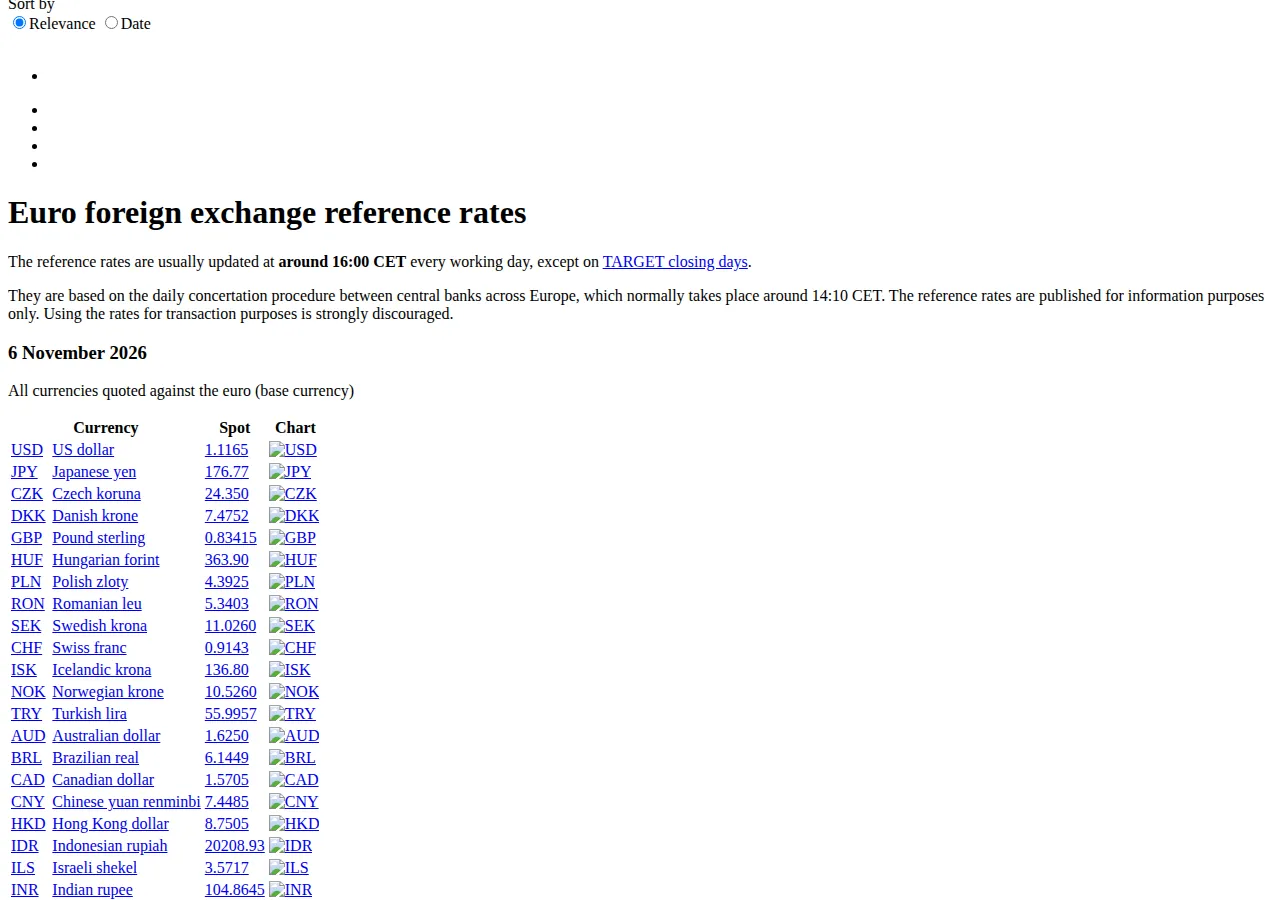
A US exporter invoices a German customer €200,000, payable in 90 days. At the ECB reference rate of 6 November 2026 — €1 = $1.1165 — that invoice is worth $223,300. If the euro falls to $1.06 before payment, it is worth $212,000 — $11,300 of margin gone.
The three exposures: name the risk before you price it
Transaction exposure is the risk on a specific receivable or payable: the €200,000 invoice is fixed in euros and in date, and its dollar value floats until settlement. Translation exposure is the accounting risk of converting foreign subsidiaries and balances into the reporting currency at period end. Economic exposure is the long-run risk that a sustained rate move changes your position because costs sit in one currency and prices in another. Each needs its own tool: a forward matches transaction exposure because it settles on that date; translation by matching assets and liabilities in the same currency; economic by moving costs, pricing, or sourcing — no derivative fixes a cost base in the wrong currency. This playbook covers transaction exposure, the one a founder can price and remove this week.
How a forward is priced: covered interest parity
A forward is a binding agreement to exchange a fixed amount of one currency for another at a fixed rate on a fixed future date. The forward rate is not a forecast: it is set by covered interest parity — the spot rate adjusted by the ratio of the two currencies' interest rates over the same period, as CME Group states in its 2024 whitepaper, assuming no arbitrage. S is spot, F is forward; the rates are the domestic and foreign 3-month rates.
CME's worked example: for September 2024 IMM contracts, euro spot was 1.07955 and the December forward 1.08445 — a swap of 0.0049, or 49 pips. Futures-implied rates that day were 5.1550 percent on the dollar and 3.4175 percent on the euro over 91 days, giving a parity-implied forward of 1.08425, or 47 pips. The 2-pip gap is the cross-currency basis. Because the forward rate comes from interest-rate arithmetic, a treasurer can check a bank's quote: a gap against the parity-implied rate is either the basis or the bank's margin.
Worked example 1: the €200,000 invoice, hedged vs unhedged
Take the opening invoice: €200,000 receivable in 90 days at ECB spot 1.1165. Price a 90-day forward by covered interest parity with illustrative 3-month rates of 4.00 percent on the dollar and 2.50 percent on the euro, 360-day year — stated assumptions, not market quotes.
The forward locks $224,132.17 — $832.17 more than the spot value, because dollar rates sit above euro rates. If the euro falls to 1.0600, the unhedged invoice pays $212,000, a loss of $11,300, while the forward still pays $224,132.17 — $12,132.17 better. If the euro rallies to 1.1600, the unhedged invoice pays $232,000, and the forward gives up $7,867.83. That is the whole point: the forward does not make money, it removes variance. A business that needs $224,132 for payroll and rent should not gamble it on the euro. A business with no fixed dollar obligation can leave the exposure open — but that is speculation, and it should be recorded as one.
Worked example 2: the option and its break-even premium
A put option on €200,000 with a strike of 1.1165 gives the holder the right, not the obligation, to sell euros at 1.1165 in 90 days. If the euro falls, the option pays the difference; if it rallies, the holder lets it expire and keeps the rally. The price is the premium, P, paid up front. The worst case is the strike value minus the premium: $223,300 minus P — worse than the forward by $832.17 plus P. So the option only beats the forward in the rally, and only when the premium is small enough: in the rally to 1.1600, the option pays $232,000 minus P against the forward's $224,132.17. Set them equal:
That is 3.52 percent of the $223,300 spot value. Below $7,867.83 the option wins in the rally; above it the forward wins in every scenario. No premium is asserted — the break-even is derived from the forward rate, so any treasurer can re-run it against a live quote. Compute it before paying the premium, not after.
Swaps: where most of the market actually trades
A foreign-exchange swap exchanges principal at the spot rate today and reverses it at a forward rate on a set date. Banks use it to fund positions and roll hedges, and it dominates the market: the Bank for International Settlements' 2022 Triennial Survey put over-the-counter FX turnover at $7.5 trillion per day in April 2022, up 14 percent from $6.6 trillion three years earlier, with FX swaps at 51 percent, spot at 28 percent, and outright forwards at 15 percent. A founder will rarely trade a swap directly, but the swap market sets the forward rates quoted — the 2-pip basis in the CME example is a swap-market price. When a bank's forward looks expensive, the cause is usually that basis.
Choosing the instrument: the decision table
| Instrument | Best for | Worst case | Cost | Authority |
|---|---|---|---|---|
| Forward | A fixed invoice on a fixed date | Gives up all upside past the forward rate | No upfront premium; margin may be required | CME Group CIP whitepaper (2024) |
| Option | Uncertain timing or a tender that may not close | Premium lost if the rate never moves | Premium up front; break-even $7,867.83 | CME Group CIP whitepaper (2024) |
| FX swap | Rolling a hedge or funding a balance | Same give-up as a forward, plus basis risk | Swap points; 51% of $7.5T daily turnover | BIS Triennial Survey (2022) |
| Do nothing | No fixed dollar obligation | The full $11,300 swing | Zero upfront; unlimited variance | ECB, 6 Nov 2026 |
The instruments differ on one axis: certainty. A forward is certain in both directions; an option buys back the upside at a price; doing nothing is a bet, and a bet belongs in a trading account, not a receivables ledger. For the full picture — netting exposures before hedging the remainder — read the companion guide on multi-currency netting.
Multi-currency IBANs: hold the currency, skip the conversion
An IBAN — International Bank Account Number — is the account identifier defined by ISO 13616, with SWIFT as the registration authority. It runs to a maximum of 34 characters: a two-letter country code, two check digits calculated by the MOD97-10 scheme, and the national account number (BBAN) of up to 30 characters. Germany and the UK use 22-character IBANs, France 27. The IBAN identifies the account; the SWIFT code, or BIC, identifies the bank. The United States does not use IBANs — a US account uses a nine-digit ABA routing number.
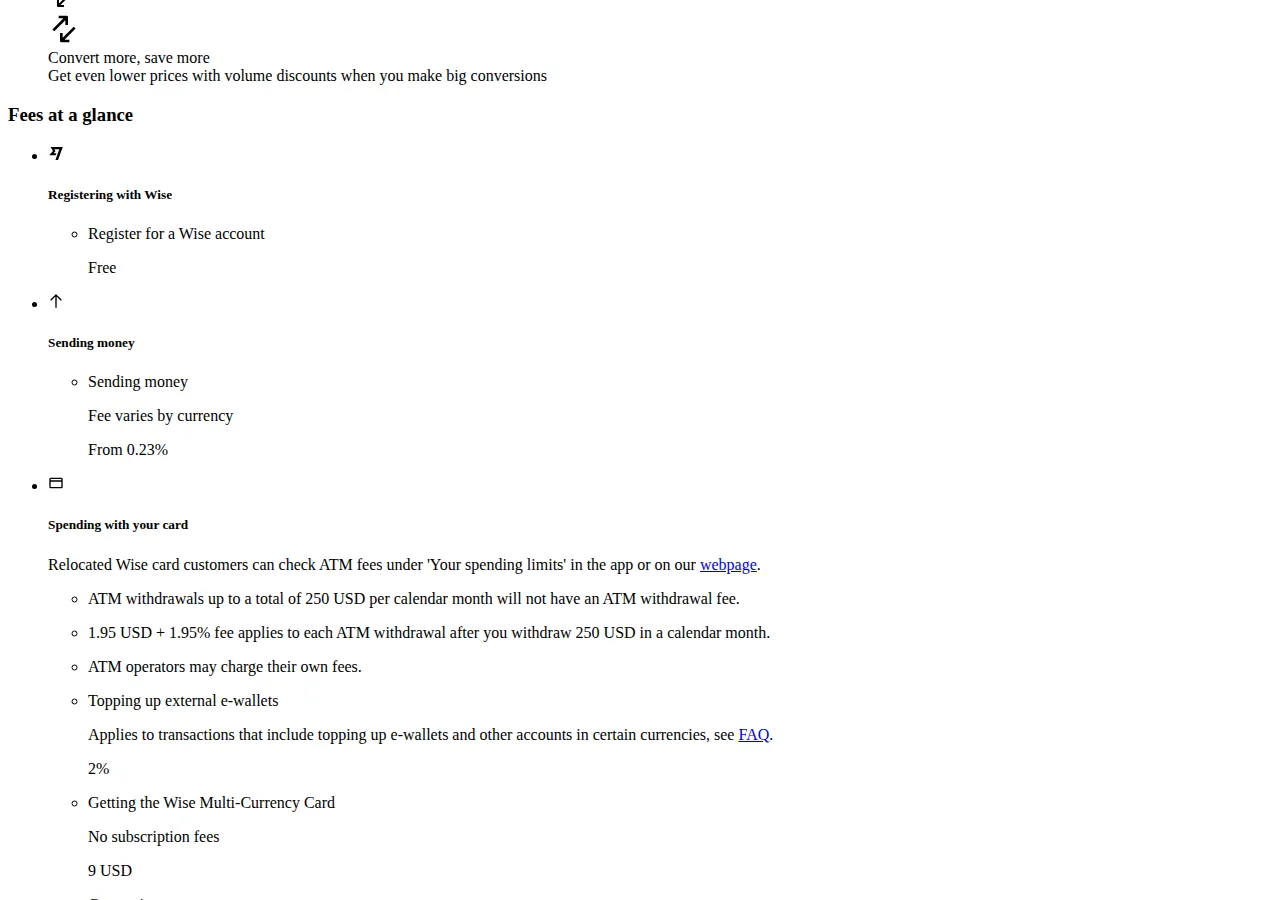
A multi-currency IBAN gives the business local account details in the customer's currency, so the customer pays by local transfer and the business holds the balance in that currency. Wise publishes account details to receive in 22 currencies, converts from 0.23 percent on the mid-market rate, and charges a one-time fee to unlock local details. Airwallex's Global Accounts hold more than 20 currencies, price FX at 0.5 percent above interbank for majors and 1.0 percent for all others, and charge $15 to $25 per SWIFT transfer. The point is the match: euros in a euro IBAN pay euro suppliers with no conversion at all, and only the unmatched remainder converts, at a known fee.
Worked example 3: what the conversion fee actually costs
Take a business receiving €50,000 a month from EU customers and converting it to dollars at the ECB reference rate of 1.1165. At Wise's published floor of 0.23 percent the fee is €115; at Airwallex's 0.5 percent above interbank, €250. Converted at 1.1165, that is $128.40 against $279.13 — $150.73 a month, or $1,808.73 a year, on identical volume.
The match is worth more than the rate. If €30,000 of that €50,000 pays euro suppliers straight from the euro balance, only €20,000 converts: €46 at Wise's rate ($51.36) against €100 at Airwallex's ($111.65). The rail matters too: ten SWIFT transfers at $15 to $25 each add $150 to $250 a month before any conversion fee. The cheapest conversion is the one that never happens. Compare the payout side in the companion guide on Wise vs Airwallex vs Payoneer, and run the invoice numbers through the invoice generator before quoting a foreign-currency price.
SWIFT gpi vs correspondent rails: tracking is the product
A traditional correspondent payment moves through a chain of banks, each deducting its fee and none telling the sender where the money is. SWIFT gpi — Global Payments Innovation — turned the chain into a tracked parcel: every gpi payment carries a Unique End-to-end Transaction Reference, the UETR, and each bank reports status, fees deducted, and the exchange rate applied into a shared tracker. SWIFT's 2019 reporting put gpi at over half of its cross-border instructions, moving over $300 billion a day, with over 50 percent credited to end beneficiaries within 30 minutes.
Those are 2019 figures. The Financial Stability Board's 2021 targets require 75 percent of cross-border wholesale payments to be credited within one hour by end-2027, with the remainder inside one business day, and retail payments to cost no more than 1 percent on average, with no corridor above 3 percent. Three days with no tracking means the corridor has not adopted gpi. Ask the sending bank for the UETR before the payment leaves: a payment without a UETR cannot be chased.
Who should not hedge
Hedging is wrong for three kinds of business. First, one whose foreign-currency flows are small against its cash balance, because the bank's minimum ticket and margin calls cost more than the variance they remove. Second, one with no fixed obligation in the other currency — no payroll, no rent, no loan repayment — is speculating when it locks a rate, and speculation needs a trading policy, not a treasury policy. Third, one that cannot state its exposure in one sentence — amount, currency, date — cannot hedge it, because a forward needs all three. If the exposure is a guess, the hedge is a guess too, and a guessed hedge adds margin calls to the uncertainty. A wire that settles in days instead of minutes changes the exposure date, so compare the rails in the companion guide on ACH vs FedNow vs wire vs RTP before fixing the date.
The hedging policy in seven steps
- List every foreign-currency receivable and payable — amount, currency, date — and net same-currency pairs first.
- Convert the net exposure to dollars at the day's ECB reference rate and record the value at risk.
- Set the hedge ratio in writing — 100 percent for contracted receivables, lower for forecast flows — and name who can change it.
- Price the forward from covered interest parity, compare the bank's quote, and ask about the gap.
- Compute the option's break-even premium before accepting any option quote.
- Book the hedge against the specific invoice and file the confirmation with it.
- Revalue open hedges monthly against the ECB reference rate and report the mark-to-market to the cash owner.
The paperwork: identifiers, accounts, and the file a bank actually asks for
Opening these accounts is an identity exercise before it is a treasury exercise. A US LLC or C-Corp opens foreign-currency accounts under its own EIN, and the bank runs KYC and AML checks on the entity and every beneficial owner before the first IBAN is issued — the same file that freezes accounts when incomplete. The IBAN is issued per currency, the SWIFT/BIC code identifies the bank, and the business's CPA will want the EIN, statements, and hedge confirmations in one file at year end, because the tax treatment of a hedge follows the item it hedges. Keep the forward confirmation stapled to the invoice it covers: a hedge without its underlying item looks speculative to the auditor.
Founder & CEO Insight — Enow A. Jovial
Hedging does not predict the rate. It prices certainty, and certainty has a known cost: $832.17 of forward premium on a €200,000 invoice, up to $7,867.83 for the option's upside, or $150.73 a month of conversion fees on €50,000 of volume. Run those three numbers before the next foreign invoice goes out, and the rate stops being a surprise. For what the invoice is worth once it lands, run the profit calculator on the hedged dollar figure, not the spot figure you hoped for.