Business Charge Cards vs Credit Cards: The Pay-in-Full Playbook
A business charge card and a business credit card look identical at the checkout counter. The difference is the contract underneath: one demands the full statement balance every month and offers no preset spending limit in exchange, while the other lets a balance revolve at a stated APR inside a fixed credit limit. Pick the wrong contract and the business pays twice.
This playbook covers pay-in-full versus revolving, NPSL, Pay Over Time, bureau reporting, and annual-fee math. Rewards get one row in the decision table.
What each product actually is
A charge card is a pay-in-full instrument. American Express states the rule on its business charge-card pages: flexible spending power, also known as no preset spending limit, and no interest on purchases, as long as the balance is paid in full each statement period. Capital One's Spark Cash Plus is the other widely sold business charge card: its own page states that no-preset-spending-limit cards "don't have a fixed line like a traditional credit card" and that "these cards are designed to be paid in full."
A credit card is a revolving instrument: a fixed limit, any payment from the minimum up, and interest at a variable APR on the unpaid balance. Chase's Ink Business Preferred states the terms on its product page: 17.99%–26.99% variable APR with a $95 annual fee. Capital One's Spark Cash states 24.74% variable APR with a $95 annual fee after the first year.
The decision table
| Decision point | Business charge card | Business credit card | Authority |
|---|---|---|---|
| Balance due each month | Full statement balance | Minimum payment allowed; rest revolves | Amex charge-card pages; Chase Ink Business Preferred terms |
| Spending limit | No preset spending limit; purchasing power adjusts with use and payment history | Fixed credit limit set at approval | Capital One Spark Cash Plus FAQ; Amex NPSL terms |
| Interest on purchases | None if paid in full; late-payment charges if not | Variable APR on any carried balance (Ink Preferred 17.99%–26.99%; Spark Cash 24.74%) | Chase Ink Preferred product page; Capital One Spark Cash terms |
| Carrying a balance on purpose | Only through Pay Over Time on eligible charges of $100 or more | The default design: revolve any balance | NerdWallet, Amex Pay Over Time guide, updated July 13, 2026 |
| Annual fee | Business Platinum $895; Business Gold $375; Business Green $95; Spark Cash Plus $150 | Ink Business Preferred $95; Ink Business Unlimited $0; Spark Cash $95 after year one | Chase and Capital One pricing pages, read November 13, 2026; Amex fees corroborated across independent guides citing Amex rates and fees |
| Credit-file treatment | Balance and payment history report; no utilization ratio exists | Balance reports against the fixed limit; a utilization ratio is computed | Experian business credit report contents page |
| Rewards | See the rewards playbook | See the rewards playbook | Amex vs Chase vs Capital One business credit card rewards playbook |
The pay-in-full rule, and what happens when it breaks
The pay-in-full rule is the whole product. On a charge card, the statement balance is due in full on the due date. American Express describes up to 55 interest-free days on its business charge cards. That float costs nothing when the balance clears.
When the rule breaks, Capital One states that Spark Cash Plus charges a 2.99% late fee if the minimum payment is not made by the due date. American Express charges late-payment fees and can restrict the account, and the late payment lands on the business credit file as a delinquency. A revolving card absorbs a missed full payment as interest: the minimum is paid, the rest is carried.
No preset spending limit: what it is and what it is not
No preset spending limit does not mean unlimited spending. Capital One states it directly on the Spark Cash Plus page: "No preset spending limit does not mean unlimited spending. The amount you can spend can change over time based on your spending behavior, payment history, credit profile and other factors." American Express uses the same framing: purchasing power adjusts with card use, payment history, and credit history.
NPSL means the limit is a moving judgment, not a printed number. A $40,000 inventory purchase that would breach a $25,000 revolving limit can clear on a charge card if the business has the payment history to support it — and can be declined on the same card if it does not. Unsure whether an amount will clear? Pre-clear it with the issuer. The operating cash behind that judgment is covered in the Mercury vs Relay vs Wise business banking guide.
Pay Over Time: the charge card's revolving escape hatch
Pay Over Time turns a charge card into a part-time credit card. Eligible purchases of $100 or more can be moved to a Pay Over Time balance and paid off over time with interest, while unmoved charges are still due in full. Business Green, Gold, and Platinum holders are pre-enrolled. The issuer assigns a separate Pay Over Time limit, which moves with purchase, payment, and credit history.
Pay Over Time APRs are variable and cardmember-specific; reported APRs run from about 17.7% to 28.7% — the same band as the revolving cards here, which is the point: Pay Over Time does not buy cheaper interest. It buys the right to keep the NPSL and float while financing one large purchase. The math below prices a $10,000 purchase financed for 12 months at an assumed 24.99% APR — an assumption inside the reported range, stated as such, not a printed issuer figure.
One $10,000 purchase financed for a year costs $1,404.68 in interest at the assumed rate. Pay Over Time is a tool for a single lumpy purchase with a dated repayment plan, not a standing facility. A business financing purchases monthly should hold the revolving card.
The revolving math: what carrying a balance actually costs
Take a $20,000 balance carried for 12 months at 21.99% APR — the midpoint of the Ink Business Preferred range of 17.99%–26.99% — with monthly compounding and no new charges:
At 17.99% the same year costs $3,910.01; at 26.99%, $6,118.45.
At 21.99% APR, one month of interest is $91.63 on $5,000, $366.50 on $20,000, and $1,099.50 on $60,000 — more than the Business Platinum annual fee.
Monthly cost at stated spend levels
Three monthly spend levels, two behaviors: pay in full on the Business Platinum, or carry the month's spend for one month on the Ink Business Preferred at the 21.99% midpoint APR. Fees are prorated monthly; rewards are excluded.
| Monthly spend | Business Platinum, paid in full | Ink Business Preferred, balance carried one month |
|---|---|---|
| $5,000 | $74.58 fee; $0 interest; $74.58 total | $7.92 fee; $91.63 interest; $99.55 total |
| $20,000 | $74.58 fee; $0 interest; $74.58 total | $7.92 fee; $366.50 interest; $374.42 total |
| $60,000 | $74.58 fee; $0 interest; $74.58 total | $7.92 fee; $1,099.50 interest; $1,107.42 total |
At $5,000 a month the two cost nearly the same. At $20,000 the charge card is $299.84 a month cheaper; at $60,000, $1,032.84.
At low spend the fee math cuts the other way: the $895 Platinum fee against the $95 Ink Preferred fee is an $800-a-year gap, covered by $40,000 of spend at 2% cash back:
Spark Cash Plus refunds its $150 fee every year the business spends at least $150,000, when 2% cash back returns $3,000 a year; at $60,000 a year the business pays the $150 and earns $1,200 back.
How each card reports to the business credit file
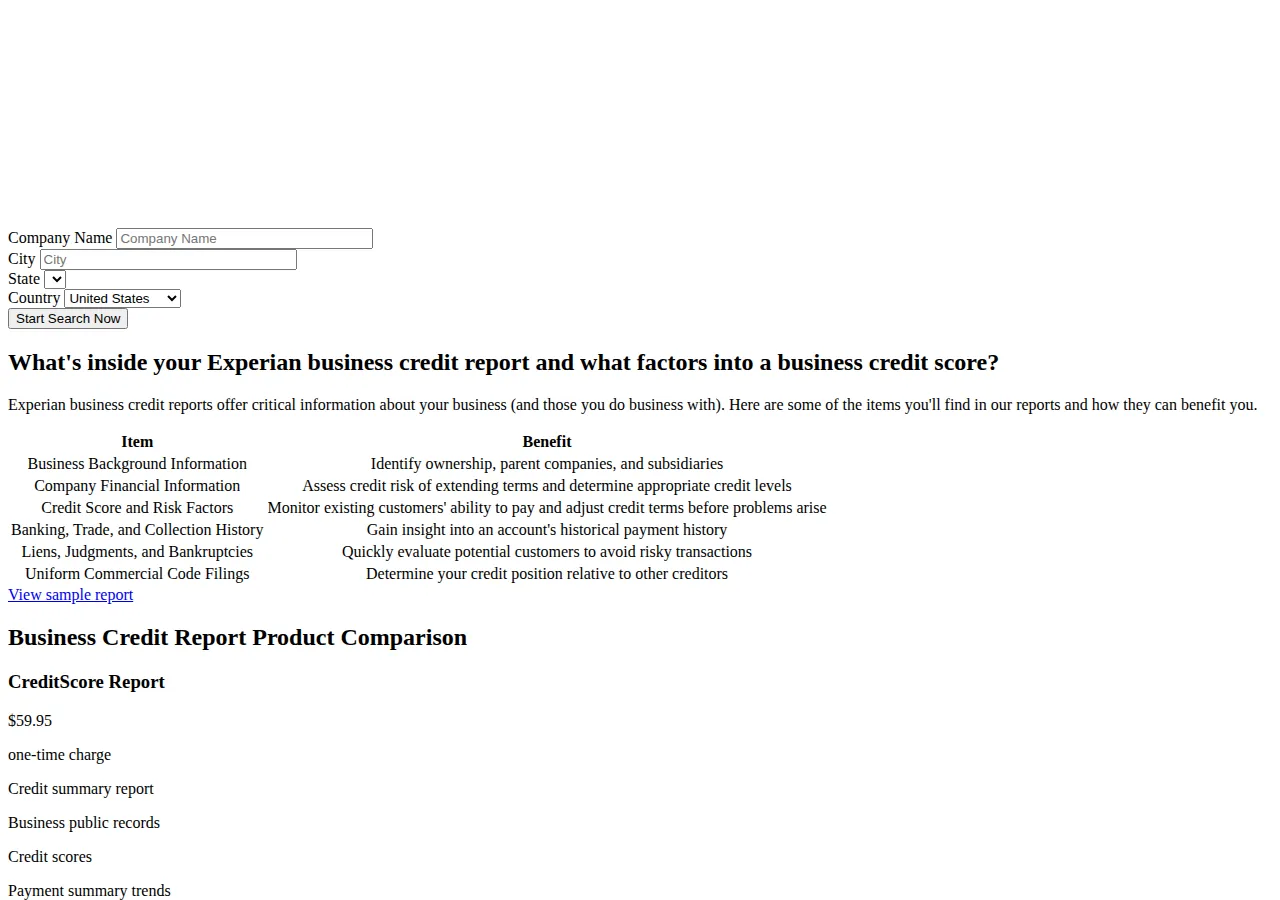
Experian's business credit report page lists a report's contents: background and financial information, credit score and risk factors, banking, trade, and collection history — "gain insight into an account's historical payment history" — plus liens, judgments, bankruptcies, and UCC filings. Payment history is in the file either way.
A revolving card reports a balance against a fixed limit, so the file computes a utilization ratio: $20,000 on a $25,000 limit is 80%; $5,000 is 20%. A charge card has no preset limit, so there is no denominator and no utilization ratio to report — though the balance and payment history still report.
Two honest limits. First, neither Dun & Bradstreet nor Equifax publishes, on the pages this cycle could open, a rule stating how a charge-card balance feeds a business score. Second, the business file is not the personal file: American Express business cards generally do not report to the personal credit bureaus when opened, though the owner's personal credit is still pulled at application.
Founder & CEO Insight — Enow A. Jovial
The bookkeeping layer: EIN, CSV, ACH, and the CPA
The application asks for the EIN for an LLC, S-Corp, or C-Corp, or a sole proprietor's Social Security number, with Know Your Customer (KYC) checks before approval. Once approved, export the card feed by CSV or API weekly, not at month end. Set ACH autopay to the full statement balance on either card; the minimum-payment setting is how a revolving balance starts by accident. Under Generally Accepted Accounting Principles (GAAP), interest is a finance cost on its own line, not an operating expense. The CPA should also note the FICO-based personal guarantee: the owner is personally liable on most business cards.
Substantiation: the accountable-plan clock
Card spend is deductible only if it is substantiated. IRS Publication 463, chapter 6, sets out the accountable-plan rules — business connection, adequate accounting within a reasonable period, return of excess within a reasonable period — and gives safe harbors defining "reasonable":
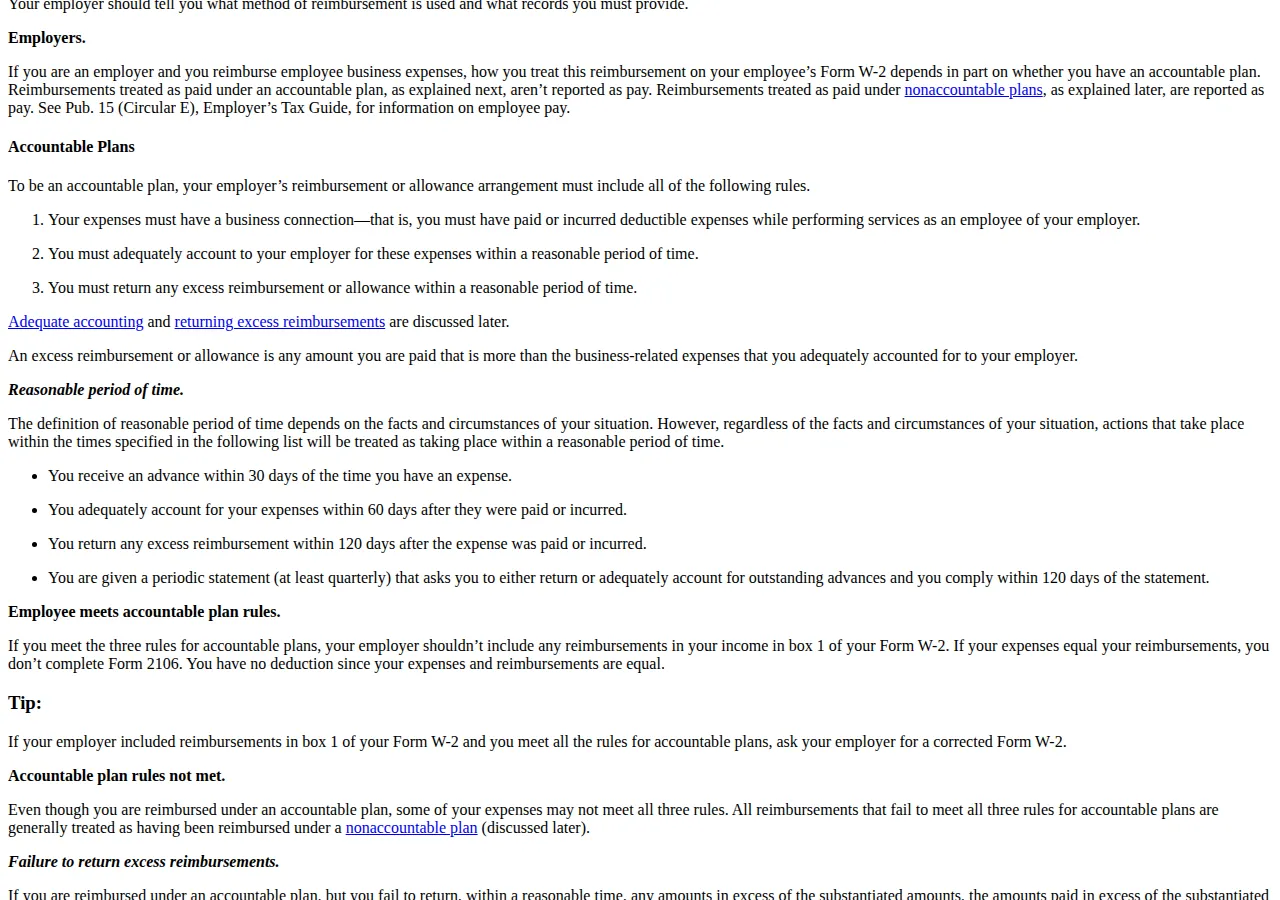
- An advance received within 30 days of the expense.
- Adequate accounting within 60 days after the expense was paid or incurred.
- Return of any excess reimbursement within 120 days after the expense was paid or incurred.
The card type changes how easily a business meets that clock. A charge card forces a monthly reckoning: the statement arrives, the full balance is due, and the expenses must be accounted for first. A revolving card lets the accounting slide, because the minimum payment keeps the account current while the receipts sit unfiled.
The switch workflow
Step 1 — Current contract. Write down the APR, annual fee, and limit or NPSL status from the current card's terms page.
Step 2 — Last 12 months. Total interest, fees, and late fees from the last 12 statements.
Step 3 — Balance, not rewards. Twelve months paid in full qualifies the business for a charge card; any carried month means a revolving card.
Step 4 — Credit file. Pull the Experian business credit report and the D&B file; note balances, limits, and late-payment marks.
Step 5 — Move the spend. Move recurring spend first — software, advertising, travel — and keep the old card open until the first new statement clears.
Step 6 — Controls on day one. ACH autopay to the full statement balance, a 60-day accounting rule, a weekly CSV export, and the break-even calculator.
Step 7 — Re-price after 90 days. Compare the new card's interest and fees against the old card's last quarter; if it costs more, switch back.
Who should NOT use this
A charge card is the wrong product for a business with lumpy cash flow: seasonal, waiting on one large receivable, or paid on 90-day terms by its largest customer. The pay-in-full rule does not care that the receivable is good; it cares that the money is in the account on the due date. A revolving card is the wrong product for a business that carries balances it does not need to carry, and for one about to apply for a term loan: an 80% utilization reading in the application month can move the lender's decision. Neither card fits a business without an EIN, a separate business bank account, and a bookkeeper or CPA who reviews the statements monthly. Disputes are a separate discipline: see the chargeback defense representment guide.
Pre-application checklist
- [x] Confirm 12 months paid in full before choosing a charge card.
- [x] Write down the APR, fee, and limit or NPSL status from the issuer's terms page.
- [x] Price the last 12 months of interest, fees, and late fees.
- [x] Pull the Experian and D&B business credit files; note balances, limits, and late marks.
- [x] Set ACH autopay to the full statement balance on day one; put the 60-day and 120-day rules in the expense policy.
- [x] Run the break-even calculator at actual monthly spend; re-price after 90 days.
The contract is the product. A charge card is a discipline instrument: no preset limit, no interest, a full balance due every month, Pay Over Time as a priced exception for one large purchase. A credit card is a flexibility instrument: a fixed limit, a minimum payment, interest at a printed APR for every dollar carried. Either choice, made on these numbers and re-priced after 90 days, is defensible. The indefensible choice is the one made on the rewards page.